
Introduction to Epoxy Flooring
When it comes to durable and visually striking surfaces, epoxy flooring has become one of the most popular choices for residential, commercial, and industrial spaces. This flooring system is created by applying multiple layers of resin and hardener over a concrete base, forming a seamless, high-performance surface. The result is a glossy, smooth, and incredibly tough floor that can withstand heavy traffic, chemicals, moisture, and impacts.
Homeowners are increasingly installing epoxy coatings in garages, basements, kitchens, and even living areas. Businesses, warehouses, hospitals, and retail stores rely on epoxy for its durability and professional finish. Beyond aesthetics, epoxy floors provide long-term structural protection to concrete surfaces. While its appearance is attractive, many property owners also carefully evaluate epoxy flooring cost before beginning their project, as pricing varies based on area size, design, and installation complexity.
Understanding both the benefits and financial considerations helps you make an informed decision for your space.
How Epoxy Flooring Works
To understand why epoxy flooring performs so well, it’s important to know how it works. Epoxy is a thermosetting polymer created by mixing resin and hardener. When combined, these materials chemically react to form a rigid plastic material that bonds strongly to concrete surfaces.
The installation process typically involves surface preparation, crack repair, primer application, and multiple coating layers. Proper surface preparation is critical because the epoxy must bond directly with the concrete. Any dirt, oil, or moisture can compromise the final finish.
Once cured, the floor becomes resistant to stains, abrasions, and chemicals. Unlike traditional paint, epoxy forms a thick, protective layer rather than a thin coating. This thickness increases strength and longevity. Although some homeowners consider DIY kits, professional installation often ensures better durability and appearance. Installation quality significantly influences epoxy flooring cost, especially when advanced designs or metallic finishes are requested.
Types of Epoxy Flooring
There are various styles of epoxy flooring, each designed for different needs and aesthetic preferences. Choosing the right type affects both performance and epoxy flooring cost.
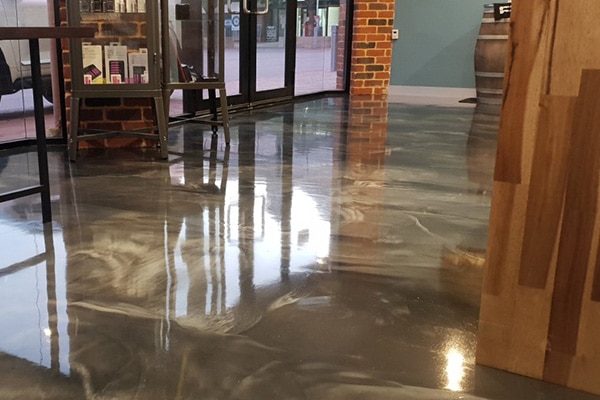
Solid color epoxy is the most common and budget-friendly option. It provides a clean, polished appearance suitable for garages and commercial settings. Metallic epoxy creates a marble-like, three-dimensional effect and is popular in modern interiors. Flake epoxy systems include decorative vinyl flakes that enhance texture and slip resistance. Quartz-filled epoxy offers additional durability and is often used in industrial environments.
Self-leveling epoxy is ideal for uneven surfaces and creates a smooth, seamless finish. Anti-static epoxy flooring is used in laboratories and electronics manufacturing areas where static control is essential.
Each type varies in thickness, materials, and installation time. More decorative and specialized options typically increase overall project pricing, making it essential to compare design goals with budget expectations before finalizing your flooring system.
Benefits of Epoxy Flooring
The growing popularity of epoxy flooring can be attributed to its impressive list of advantages. First and foremost, durability stands out. Epoxy surfaces resist heavy loads, abrasions, and chemical spills, making them perfect for garages and warehouses.
Another major benefit is low maintenance. The seamless surface prevents dirt accumulation and is easy to clean with simple sweeping and mopping. Unlike tile or hardwood, epoxy has no grout lines or seams where debris can hide.
Moisture resistance is another advantage. Properly installed epoxy prevents water penetration, protecting the underlying concrete from damage. It also enhances lighting by reflecting light across the room, which can reduce the need for additional fixtures in large spaces.
While evaluating these benefits, many property owners weigh them against epoxy flooring cost. Although the upfront investment may be higher than paint or vinyl, long-term durability often results in lower maintenance and repair expenses over time.
Factors That Influence Epoxy Flooring Cost
Understanding epoxy flooring cost requires examining multiple factors. Pricing typically depends on the size of the space, the condition of the concrete, and the type of epoxy chosen.
Surface preparation plays a major role in pricing. If the concrete requires grinding, crack filling, or moisture barrier treatments, the cost will increase. Larger areas may reduce the price per square foot but increase the total overall investment.
Design complexity also impacts cost. Metallic finishes, custom patterns, and multi-color systems require additional materials and labor. Thickness of the coating matters too; thicker systems provide greater durability but require more product.
Labor costs vary depending on geographic location and contractor expertise. While DIY kits may appear affordable, improper application can lead to peeling or bubbling, ultimately increasing expenses. Carefully comparing estimates ensures that epoxy flooring cost aligns with your expectations and quality standards.
Average Pricing Breakdown
The average epoxy flooring cost typically ranges from $3 to $12 per square foot, depending on project complexity. Basic garage coatings fall on the lower end of the spectrum, while decorative or commercial-grade systems reach higher price points.
A standard two-car garage might cost between $1,500 and $3,500. Larger commercial spaces may require significantly higher budgets due to additional surface preparation and industrial-grade materials.
Moisture testing, primer coats, and protective topcoats add to overall expenses. Decorative flakes or metallic pigments increase material costs. Anti-slip additives may also affect pricing.
While the initial epoxy flooring cost may seem substantial, it is important to consider lifespan. Properly installed epoxy floors can last 10 to 20 years or more with minimal maintenance. When compared to tile replacements or carpet upgrades, epoxy often proves cost-effective over the long term.
Installation Process Explained
Professional installation of epoxy flooring involves several precise steps to ensure durability and visual appeal. The process begins with thorough cleaning and degreasing of the concrete surface. Contractors then grind or shot-blast the floor to create a textured surface for proper adhesion.
Cracks and imperfections are repaired before applying a primer coat. The epoxy mixture is then poured and evenly spread across the floor using rollers or squeegees. Depending on the system, decorative flakes or metallic pigments are added while the epoxy is still wet.
After curing, a protective topcoat seals the surface and enhances shine. The curing process may take 24 to 72 hours before the floor is ready for light use, and up to a week for full curing.
The complexity of these steps directly influences epoxy flooring cost. Skilled labor ensures proper bonding and reduces the risk of premature failure, making professional installation a worthwhile investment.
Maintenance and Longevity
One of the reasons epoxy flooring remains popular is its simple maintenance requirements. Routine cleaning involves sweeping and occasional mopping with mild detergent. Because the surface is seamless, dirt and spills are easy to remove.
Avoiding harsh chemicals and abrasive cleaning tools helps preserve the glossy finish. Protective pads under heavy equipment prevent scratches. In high-traffic commercial environments, occasional reapplication of a topcoat can extend the floor’s lifespan.
Longevity depends on installation quality and usage conditions. Residential epoxy floors can last two decades, while industrial settings may require earlier refinishing due to heavy machinery use.
When evaluating epoxy flooring cost, long-term maintenance savings should be considered. Unlike carpet or laminate, epoxy does not require frequent replacement, making it a financially smart choice over time.
Is Epoxy Flooring Worth the Investment?
Choosing epoxy flooring involves balancing durability, aesthetics, and budget. For homeowners seeking a sleek garage finish or businesses requiring chemical-resistant surfaces, epoxy provides unmatched performance.
Although epoxy flooring cost varies based on design and preparation needs, its longevity and low maintenance often justify the expense. The seamless appearance enhances property value and creates a professional atmosphere in commercial settings.
Epoxy is especially beneficial in environments exposed to moisture, heavy equipment, or frequent cleaning. Its resistance to stains and cracks reduces repair costs over time. For property owners looking for a long-term flooring solution that combines style with strength, epoxy remains a practical and visually impressive option.
Conclusion
Epoxy flooring stands out as a durable, versatile, and visually appealing solution for both residential and commercial spaces. From garages and basements to warehouses and retail stores, this flooring system delivers long-lasting performance with minimal maintenance requirements. While epoxy flooring cost depends on surface preparation, design choice, and installation complexity, the long-term benefits often outweigh the initial investment.
Read More:- Flat Roof Repair NJ: Complete Guide for Homeowners